Freewrite
With this freewrite, as well as all freewrites, do not put any pressure on yourself to be good. You are simply getting thoughts on the page. You can write in poetry or in prose, but feel free to write poorly, sloppily, redundantly, and with cliches. Now is the time for ideas—we will eventually sculpt those ideas into art.
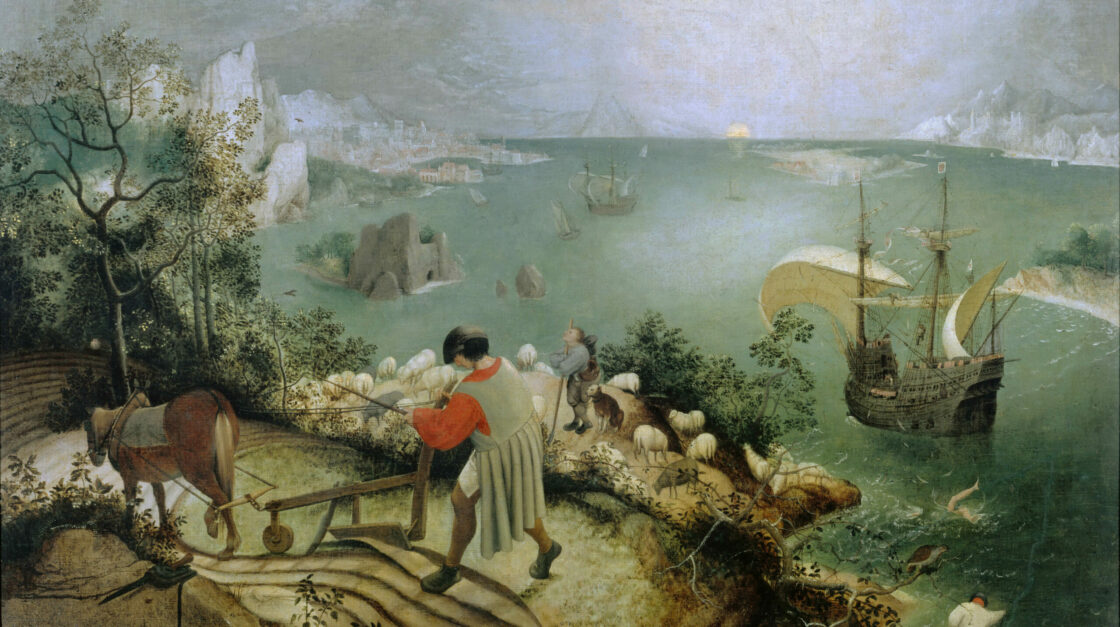
Think about a piece of art or media that inspires you. A movie, show, painting, sculpture, song, photograph, dance—really, any form of creative expression, other than writing. You can even choose a dream you’ve had if it inspires you.
Freewrite for 8-10 minutes about that piece of art of media. Write a physical, concrete description of the art, write how the artwork makes you feel, and maybe even write about how the art accomplishes that transmission of feeling. Try to write from memory, but feel free to pull the artwork up for reference.
Poem: “This Room” by Devin Balwit
Retrieved from Rattle.
He asks to make love, and because he asks, I do,
though my aging desire has turned instead tothe bedside table, to the London Review
of Books, to the now sexier pursuitof end rhymes and long walks through
leaf-blaze. I’d never thought it truethat the fathomless lust of thirty-two
could silt and still. Now, I must brewit up if I want it. It’s not you,
I hasten to tell him, unclewinghis anxiety and letting the breeze undo
How much earnest whispering this roomhas witnessed—plans to make new
life, plans to help failing parents moveto their last dependency, rue
at lost chances, the shy wooingof new ones—this, too,
what lovers do between the sheets. The viewfrom the window doesn’t get old, the moon,
and morning peeking in, the bed imbuedwith both solemnity and mirth, the glue
that binds us, like two ancient, tangled yews.
Divinations
You can find the photo that this poem was written about here.
Ekphrasis describes a poem inspired by a work of art. The key word here is inspired: a poem should not just try to describe or explain another piece of art, but it should have its own life apart from the art, an expansion of the artwork’s themes and feelings that is informed by the poet’s own mind.
This poem captures the complexity of love at a certain stage, when the relationship has settled into a familiar cadence and passion has tempered to wisdom. The photo itself captures a seemingly ordinary moment—wind blowing through a window curtain. That the poem itself explores domesticity is unsurprising, but I love how it conveys not just the poem’s place, but its sense: that of something calm and quieted, of gentle romance.
I love how the poet both uses rhyme and references the rhyme itself in the poem. The repeated “oo” sound at the end of each line brings with it a hushed quality, like a breeze filtering through a curtain. I also love the poem’s final image:
the glue
that binds us, like two ancient, tangled yews.
Tangled yews are not themselves glued, but that’s the point—what connects these two bodies is not a glue, but an intertwinement, which means they are not just conjoined, but have grown into one another. To separate them would not be the minor pain of a ripped bandaid; it would be something akin to conscious surgery.
This is a great piece of ekphrasis, as the poet has turned the photograph into a symbol of domestic love, examining the ways that relationships evolve with age. The sense of the original photo is present, but the poem discovers something new, beautiful, true.
Ekphrastic Poetry Prompt
Write an ekphrastic poem! Convey both the sense of the inspiration and your own discoveries within the artwork. Don’t hew too closely to the artwork’s concrete description, but convey a sense of that artwork in your poem’s form and word choice.





Leave a Reply